I’m Not Scared of the Sun Anymore
I’ve become completely obsessed with circadian alignment recently and I’m not going to stop talking about it. The more I learn about light, our skin and what sunlight actually does in the body, the more everything seems to click into place for me.
I’ve been listening to loads of podcasts with Zaid Dahhaj, who is incredibly knowledgeable about light and circadian biology, and honestly it’s opened up another enormous rabbit hole. I keep hearing things and thinking, YES. This makes so much sense. I’m not writing this as a scientific paper or telling anyone else what they should do. I’m sharing what I’ve been learning, what intuitively makes sense to me and why I’ve personally changed my relationship with the sun so much. For years we’ve been taught to fear it.
Sun equals ageing. Sun equals pigmentation. Sun equals skin cancer. Cover up. Put your sunglasses on. Wear SPF every day, even in winter. Avoid UV. Yet the more I learn about circadian biology, the more I think we’ve taken something incredibly natural and made it incredibly complicated. Sunlight isn’t one thing.
Morning light, UVA, UVB, visible light and infrared are all different wavelengths that come through at different times and in different amounts throughout the day. They have different jobs, but in nature they’re not sitting there working completely independently from each other. They exist together as this beautifully balanced changing spectrum of light that our bodies have evolved underneath.
This is one of the things I find so fascinating when we talk about certain wavelengths being harmful. How often in nature would our bodies actually experience that wavelength completely on its own?
Our bodies have lived with sunrise, daylight, UV, infrared, sunset and then darkness for thousands and thousands of years. And our biology is literally built around it.
Every cell in our skin is under circadian control. DNA repair, pigmentation, inflammation, cell turnover and how our skin responds to UV are all connected to our internal clocks. So surely we need to start looking at the whole picture.
If you skip morning light, spend your entire day indoors under artificial lighting, look at screens into the evening and then never experience proper darkness at night, what is that doing to the way your cells respond when you suddenly go and sit in intense sunlight?
This is where my thinking has completely changed.
Instead of constantly asking, “How do I protect myself FROM the sun?” I’m much more interested in asking, “What can I do with my lifestyle to make my body better able to live WITH the sun?”
Morning light. Natural daylight. Being outside regularly. Gradual UV exposure. Darkness at night. Proper sleep and recovery. It just makes sense to me.
MELANIN
And then there’s melanin. Honestly, the more I learn about melanin the more incredible I think it is. We’ve been taught that a tan is damage, full stop. Yet melanin is one of our body’s own natural forms of photoprotection.
Melanin absorbs UV radiation and dissipates that energy as heat, helping protect the cells underneath. It’s antioxidant, anti-inflammatory, can bind heavy metals and has this incredible ability to absorb energy across a huge part of the electromagnetic spectrum. Think about that for a minute.
We talk about melanin as though its only purpose is determining the colour of our skin, when it is doing so much more. The more melanin you naturally have, the longer your skin can tolerate sunlight before burning. Darker skin naturally has far greater UV protection than very pale skin.
And the way our body creates a tan is fascinating too. UVB stimulates melanocytes to create new melanin. UVA then oxidises that melanin and darkens it.
So rather than seeing my tan as something I need to fear, I now see melanin as part of the way my body adapts to its environment. That doesn’t mean I lie outside cooking myself. Quite the opposite.
HOW I APPROACH THE SUN
I think about sunlight in exactly the same way I think about exercise.
You wouldn’t sit on the sofa for six months, walk into the gym and immediately pick up the heaviest weights you could find. You’d hurt yourself. You train. And this is how I approach the sun now.
I get morning light. I spend time outside regularly. I gradually expose my skin as we move through the seasons. I don’t suddenly go from virtually no sunlight to eight hours lying beside a pool. And when I feel I’ve had enough, I move into the shade. Look at animals. When the midday sun gets really strong and they’re hot, they find shade. They don’t need an app to tell them.
And being in the shade doesn’t mean you’ve suddenly disconnected yourself from sunlight. You’re still outside. You’re still surrounded by natural daylight and infrared. You’ve simply reduced your direct UV dose. You can absolutely still burn. That’s important.
If you get too much UV for your skin on that particular day, you will burn. It doesn’t mean you’ve failed at circadian alignment. It means you’ve had too much sun. Dose matters. Interestingly though, I very rarely burn now compared with how I used to. My lifestyle is completely different. I’m outside far more. I get morning light. I respect darkness at night. I gradually build my exposure and my diet has changed massively too.
I eat far less processed food and processed oils than I used to, and one of the things I’ve been learning about is the relationship between the fats we eat, oxidative stress and how our skin handles sunlight. This makes so much intuitive sense to me.
Our skin is built from what we feed it. Our cell membranes are built from what we feed them. Why wouldn’t our diet affect how our cells respond to something as powerful as UV? My own skin certainly behaves completely differently now.
VITAMIN D + SUNSCREEN
Then there’s vitamin D. UVB hitting our skin starts vitamin D synthesis.
And vitamin D is involved in immune function, inflammation, cell growth and the regulation of so many processes in the body. We also know how much discussion there is around vitamin D and cancer.
So I find it fascinating that we talk about UVB almost entirely as something we need to block while rarely talking about why our bodies have a biological pathway specifically designed to use it. For me, sunlight isn’t simply “carcinogenic”. There is another side to that conversation.
Sunlight drives vitamin D synthesis and vitamin D is hugely important for immune health and normal cellular function. I personally believe sensible sunlight is part of a healthy, anti-cancer lifestyle rather than something humans should spend their lives hiding from.
Obviously that doesn’t mean burning yourself is healthy. It isn’t. Again, dose. And then sunscreen enters the conversation. This has become another huge area of questioning for me. SPF 15 blocks roughly 93% of UVB and SPF 50 around 98%. But UVB is the wavelength that stimulates vitamin D production and helps stimulate new melanin.
So if melanin is part of our natural photoprotection and UVB helps us create it, I find it strange that our answer has become to continuously block that process rather than teaching people how to build a healthy relationship with sunlight. We put SPF on before we even go outside. Then sunglasses. Then sit behind glass. Then spend most of the day indoors.
What signals are we actually giving our bodies? I’m also questioning what’s physically in sunscreen.
We’re putting chemicals onto our largest organ and then taking them out into intense sunlight and heat. Some sunscreen chemicals are absorbed into the body, and personally I want to know a lot more about what I’m using rather than blindly assuming that because something is sold as protective, there can’t possibly be another side to the story.
Something intuitively doesn’t make sense to me about fearing sunlight while unquestioningly covering ourselves in chemicals every time we experience it. And I’m allowed to question that.
GLASS, SUNGLASSES + LIGHT
The famous truck driver picture is another example I now look at completely differently. We’ve all seen it. One side of his face looks dramatically more aged after years of driving and we’re shown it as an example of what sunlight does to your skin.
But he wasn’t sitting outside experiencing full-spectrum sunlight. He was behind glass. Glass filters wavelengths.
UVB is largely filtered by ordinary window glass while UVA passes through much more easily, meaning the light hitting that side of his face was completely different from the balanced spectrum he would have experienced outside.
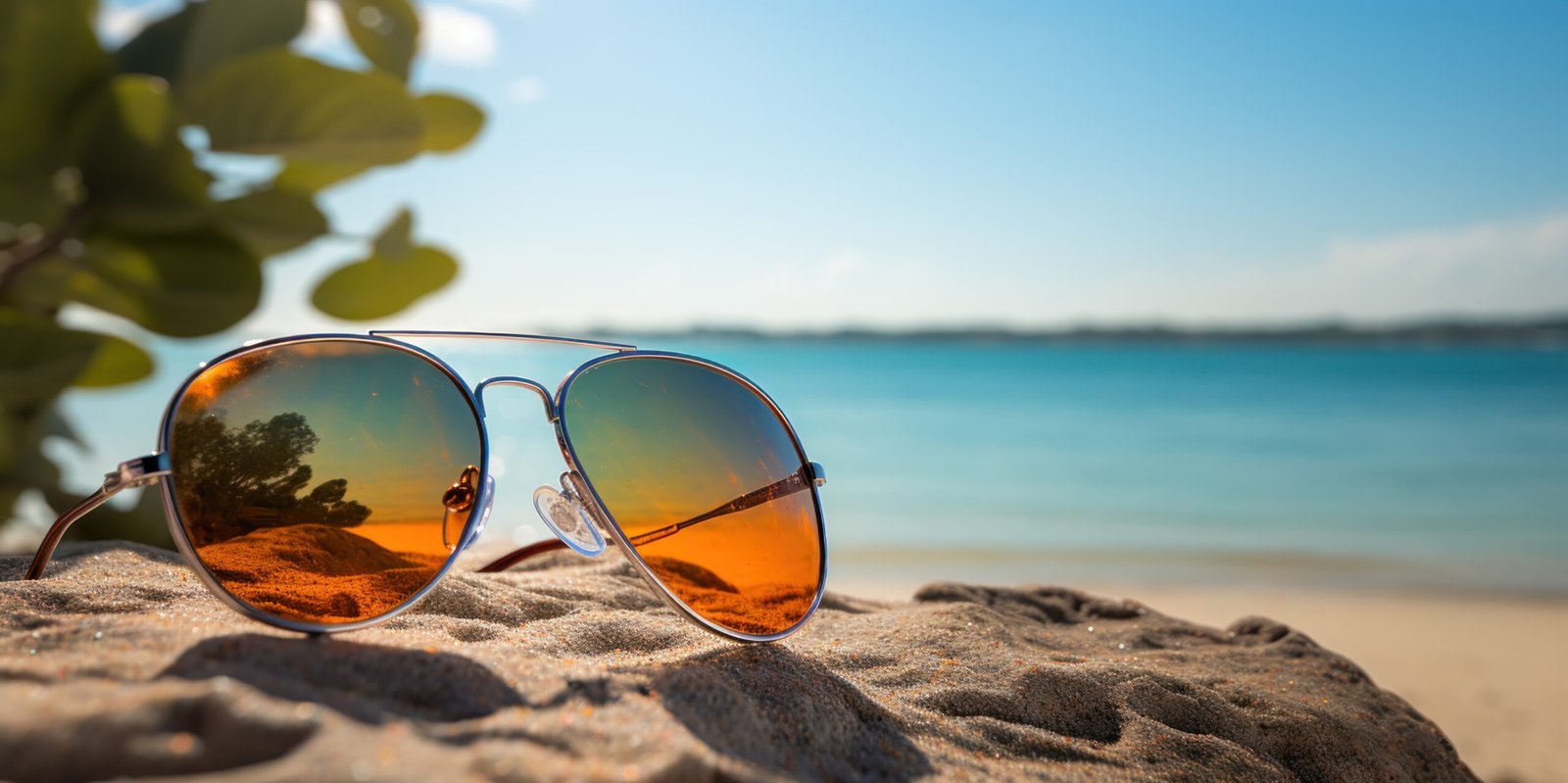
Once you start understanding wavelengths, you look at that photograph very differently. The same thing happened when I started thinking about sunglasses. Light entering our eyes isn’t only helping us see. Our eyes are one of the major ways our brain works out what time of day it is. Light is information.
So constantly putting dark lenses between our eyes and the natural environment is something I’m questioning too. I’ve heard fascinating discussions about the light entering the eye being part of the signalling that prepares the body for UV exposure and melanin production, and intuitively this makes sense to me.
Why would our eyes and our skin be operating as two completely separate systems when the whole body is responding to the same environment?
I’ve stopped automatically putting sunglasses on every time the sun appears. I want natural daylight reaching my eyes. That does NOT mean staring at the sun. Please don’t.
Eye health itself is another rabbit hole. Spending more time outdoors is linked with better protection against myopia in children and I’ve been learning about violet light and the role it may have in eye development.
Again, it brings me back to the same thing. GET OUTSIDE.
We wake up inside, drive behind glass, work inside, sit underneath artificial lighting, stare at screens, drive home behind glass and then spend the evening under artificial light.
And somehow we think the natural environment is the problem.
QUESTIONING THE RESEARCH
The animal studies around UV have also really made me think.
So much research is done using mice. Mice are nocturnal. They’re designed to be active at night. They have fur!
Then you have studies using albino mice that have virtually no melanin protection and they’re being exposed to light in ways they would never naturally experience. There are so many variables.
Yet conclusions from experiments like these can eventually filter down into very simple messages for humans: UV BAD.
I just think we need to use our brains and ask more questions. What wavelength? What time of day? What dose? What happened earlier that morning? What happened the night before? How much melanin does that person have? What is their diet like? Are they living in natural light or artificial light? Are they sleeping in darkness? Are they taking medication that makes them photosensitive? How much sun have they already had that day?
You can’t separate the human body from its environment.
PIGMENTATION + THE BIGGER PICTURE
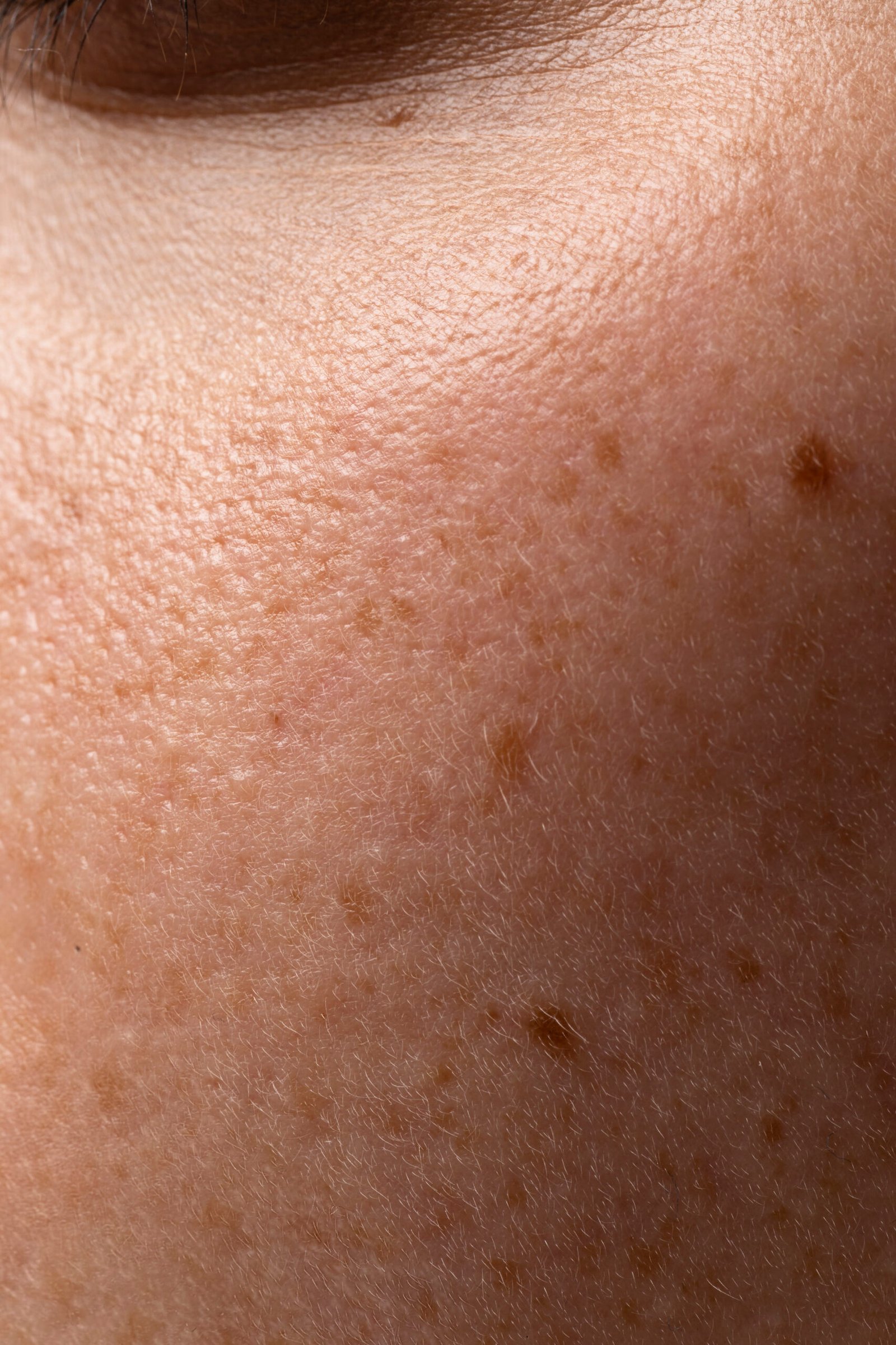
This is where pigmentation and melasma have become particularly interesting to me because pigmentation is connected to our circadian biology too. If our melanocytes are receiving signals according to the light/dark cycle, what happens when that cycle is completely disrupted?
Bright artificial light at night. Hardly any morning light. Screens until bed. Poor sleep. Then intense UV exposure. We spend so much time treating pigmentation from the outside, but I’m becoming far more interested in what signals the cells underneath are actually receiving.
This is where I’m at with health in general now.
I want to get to the root of WHY something is happening rather than constantly trying to suppress the symptom. And I think our relationship with sunlight needs exactly the same rethink.
I’m not scared of the sun anymore. I respect it. There’s a huge difference.
I’m not going to sit in midday sun until my skin is bright red just because I think sunlight is good for me. That’s no different to saying exercise is healthy so I’m going to run a marathon tomorrow having never run before.
Use your brain. Train your skin. Start slowly. Get morning light. Spend more time outside. Let your skin gradually experience UV. Know when you’ve had enough. Find shade. Then when evening comes, let your body experience darkness and recover. And repeat.
We’ve complicated something that humans have lived alongside forever. The more I learn about circadian biology, the more I find myself stripping things back rather than adding more.
Natural light during the day. Darkness at night. Real food. Movement. Sleep. Nature. And a body that is given the signals it has evolved to understand. Maybe instead of spending our lives terrified of the sun, we need to learn how to live alongside it again. That certainly feels right to me.
And the deeper I go down this circadian rabbit hole, the more I realise I’m only just getting started ☀️